Completed · Free
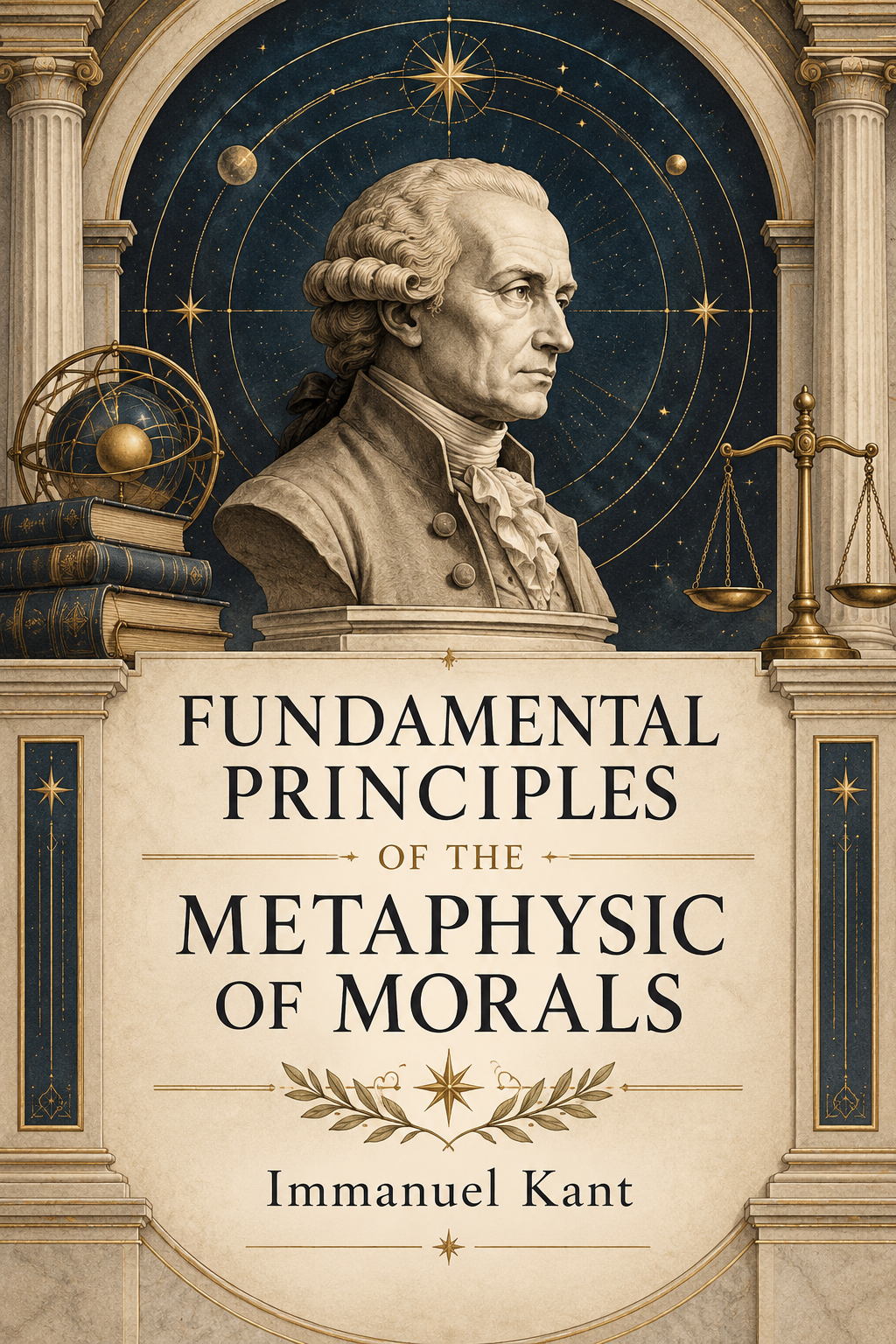
FUNDAMENTAL PRINCIPLES OF THE METAPHYSIC OF MORALS
What is it that renders an action truly moral? Is it the happiness it produces, the advantage it brings, or the praise it earns? None of these can serve as the supreme foundation of morality, for they depend upon circumstances and inclinations that are ever subject to change. In this work, I undertake to discover and establish the supreme principle of morality—a principle that derives neither from experience nor from the pursuit of happiness, but from reason itself. I shall endeavor to demonstrate that a good will alone possesses an unconditional worth; that duty commands respect not because of the consequences of our actions, but because of the moral law from which they proceed; and that a rational being must act only according to those maxims which he can at the same time will to become universal laws. For man is not merely an instrument through which nature accomplishes its purposes. As a rational being, he possesses dignity and must never be treated merely as a means, but always also as an end in himself. The freedom of the will and its capacity to give itself universal moral law shall therefore occupy our inquiry, leading us toward the foundation upon which every genuine moral obligation must rest. For the moral law does not derive its authority from what man desires, but from what reason commands him to recognize as his duty.
- Language
- EN
- Genres
- education, philosophy
- Published
Make reading more personal
Start reading now, or create a free reader account to build your personal library, find stories with search and filters, translate English text, and share feedback on authors’ drafts. Many stories are free to read.